


The research carried out by Pezcoller-SIC fellowship recipients
2027-2028 Fellowships
ELENA FIORINI (University of Verona)
“Targeting MYC amplification on extrachromosomal DNA”
In many solid tumors, including pancreatic cancer, certain genes that promote tumor growth can exist in extra copies on small DNA rings called extrachromosomal DNA (ecDNA). ecDNAs contribute to tumor progression and therapy resistance, and their presence in tumors is associated with a poor prognosis. This project aims to identify common vulnerabilities in ecDNA-bearing cells that can be exploited as novel therapeutic targets.
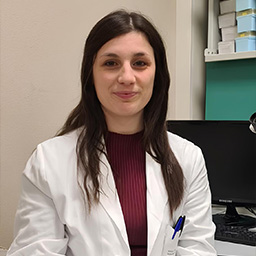
FLAMINIA PEDRETTI (IFOM, Milan)
“The Vulnerable Host: Unraveling Age-Dependent Responses to Inflammation and Chronic Stress in Early-Onset Colorectal Cancer”
In recent decades, colorectal cancer has become increasingly frequent in individuals under 50 for reasons that remain largely unknown. Our hypothesis is that the cause lies in how the young intestine responds to inflammation, an effect that may be amplified by chronic stress. Therefore, we will use animal models and patient samples to understand these mechanisms and identify new prevention and treatment strategies.
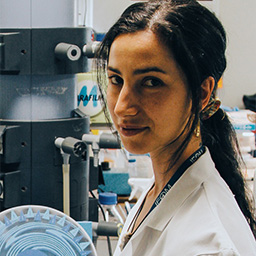
MICHELA ROSSINI (University of Padova)
“Impact of diet and organelle contact sites on mitochondrial transfer in melanoma progression”
A cell functions much like a company, where internal organelles—like corporate offices—communicate via contact sites to coordinate cellular activities. In the laboratory, we study the role of these connections in melanoma. We observed that cells with impaired intracellular communication grow more slowly, but during intermittent fasting, they grow faster than normal cells. This project investigates the underlying reasons for this phenomenon and the influence of diet on tumor progression.
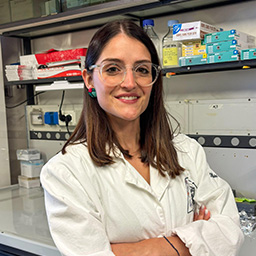
GIANCARLA BERNARDO (Istituto Nazionale Tumori, Milan)
“Microbial shadows in melanoma: uncovering the role of intratumoral bacteria in melanoma recurrence”
This study investigates how the presence of specific commensal bacteria within melanoma lesions can weaken the immune response and promote tumor recurrence. Specifically, we will analyze the role of Staphylococcus in impairing T-cell function and memory using clinical samples and experimental models. The goal is to determine whether the presence of these bacteria can help predict relapses and whether eliminating them could pave the way for novel therapeutic strategies.
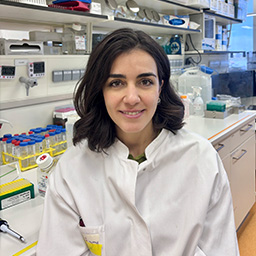
FRANCESCO VERONA (University of Palermo)
“Unveiling CD93 as a stemness marker and therapeutic vulnerability in EMT-driven colorectal cancer progression”
Our study focuses on colorectal cancer. Preliminary data have highlighted the expression of a specific biomarker on cancer stem cells—an extremely aggressive population resistant to conventional therapies and responsible for metastasis. Our goal is to unravel the molecular mechanisms through which this biomarker promotes disease dissemination. Targeting this molecule will allow us to block tumor progression and develop more effective personalized therapies.
SERGIO FORCELLONI (Bambino Gesù Children’s Hospital, Roma)
“Deciphering Translational Stress in NK Cells: The Role of Ribosome Stalling and Collisions in the Tumor Microenvironment”
This project investigates how stress within the tumor microenvironment alters translation in Natural Killer (NK) cells by inducing ribosomal stalling and collisions. The goal is to determine whether these events trigger ribosome-associated quality control mechanisms and translational stress responses, and how this impacts the anti-tumor function of NK cells. The project integrates in vitro models, RNA-seq, and ribosome profiling.
ALFREDO SMIRIGLIA (University of Firenze)
“CYP1A1 produces cholesterol-derived metabolites to sustain ER+ breast cancer progression and therapy resistance”
ER+ breast cancers rely on estrogen signaling, but a significant proportion of patients develop resistance to therapy, leading to relapse. Alterations in cholesterol metabolism can generate molecules capable of activating ER and promoting tumor growth. This study will investigate the role of cholesterol metabolites in disease progression and therapeutic resistance, while also evaluating CYP1A1 and the potential of its inhibition to enhance treatment efficacy.
CATERINA DE ROSA (Università of Campania, Luigi Vanvitelli)
“REMAP-SCLC: REstoring MAVS Activity through PRMT5/MAT2A targeting in SCLC”
Small cell lung cancer is an aggressive disease capable of evading our immune system. My project studies the MAT2A-PRMT5 axis, a resistance mechanism that “shuts off” killer immune cells. The objective is to test specific drugs to block this process and “reawaken” the immune system to fight the tumor. Furthermore, searching for these biomarkers in the blood will help predict treatment response, paving the way for increasingly targeted therapies.
IRENE FISCHETTI (Istituto Nazionale Tumori, Milan)
“Exploring ferroptosis-linked pathways in osteosarcoma: the roles of SLC7A11 and LCN2 in tumor aggressiveness and microenvironment modulation”
Osteosarcoma is the most common primary bone cancer in children and young adults. Despite available treatments, prognosis often remains unfavorable, particularly for metastatic patients. This project investigates ferroptosis, a form of programmed cell death, and two proteins, SLC7A11 and LCN2, which may help cancer cells resist it. The goal is to understand how these proteins promote tumor growth and whether they can be targeted to develop novel therapies.
2025-2026 Fellowships
GABRIELE ANTONARELLI (European Institute of Oncology, Milan)
“Identification Of Toxicity Biomarkers To Trastuzumab-Deruxtecan (T-Dxd) In Patients With Advanced Breast Cancer. Tox-Dxd: An Observational, Non-Interventional, Study”
His project aims to identify biomarkers capable of predicting
adverse events in the treatment of advanced breast cancer with Trastuzumab-deruxtecan. The research includes a retrospective analysis of 112 patients, recently published in ESMO Open, and a prospective phase involving the monitoring of 84 patients.

LUCREZIA CAMICIA (Centro di Riferimento Oncologico, Aviano)
“Study the role of Multimerin-2 in shaping tumor vessel stability to control the chemo/immunotherapy response”
Multimerin-2 is an extracellular matrix protein essential for blood vessel health, a key factor in evaluating the efficacy of anticancer therapies. Our study aims to investigate its role as a potential biomarker, with the goal of making treatments increasingly effective.

MATTIA COLUCCI (Casa Sollievo Sofferenza, S. Giovanni Rotondo)
“The functional role of EZH2 inactivation in the pathogenesis of HOXA-overexpressing Tcell acute lymphoblastic leukemia”
The project aims to provide deeper insights into the molecular mechanisms of an aggressive form of childhood leukemia (ETP-ALL). It investigates how the combination of genetic alterations promotes the disease, with the goal of identifying new therapeutic targets to develop more effective and less toxic treatments for young patients.

ANDREA COSTAMAGNA (University of Torino)
“Exploring the role of p130Cas in early metastatic pancreatic cancer cells”
Pancreatic ductal adenocarcinoma is among the most aggressive tumors due to its high metastatic potential. The project investigates how the p130Cas protein, activated by the mutated Kras oncogene, promotes the early dissemination of cancer cells through the PI3K-AKT signaling pathway, identifying potential therapeutic vulnerabilities.

MARIA VALERIA GIULI (University La Sapienza, Rome)
“Boosting synthetic lethality in High-Grade Serous Ovarian Cancer: induction of “BRCAness” via Pin1 inhibition”
Ovarian cancer is among the most lethal gynecological malignancies due to its high resistance to therapies. The study of BRCA gene mutations has improved treatments. This research investigates Pin1—an enzyme that regulates the function of many proteins, including BRCA1—as a therapeutic target to enhance treatment efficacy, even in patients without BRCA mutations.

TANIA PORCELLI (University of Palermo)
“Obesity Prompts a Permissive Microenvironment to Initiating-Tumor Process “
In the context of breast cancer, adipose tissue under obese conditions undergoes dysfunctional changes that promote the onset of pre-malignant alterations and tumor progression. Understanding these mechanisms will contribute to the development of novel therapeutic strategies.
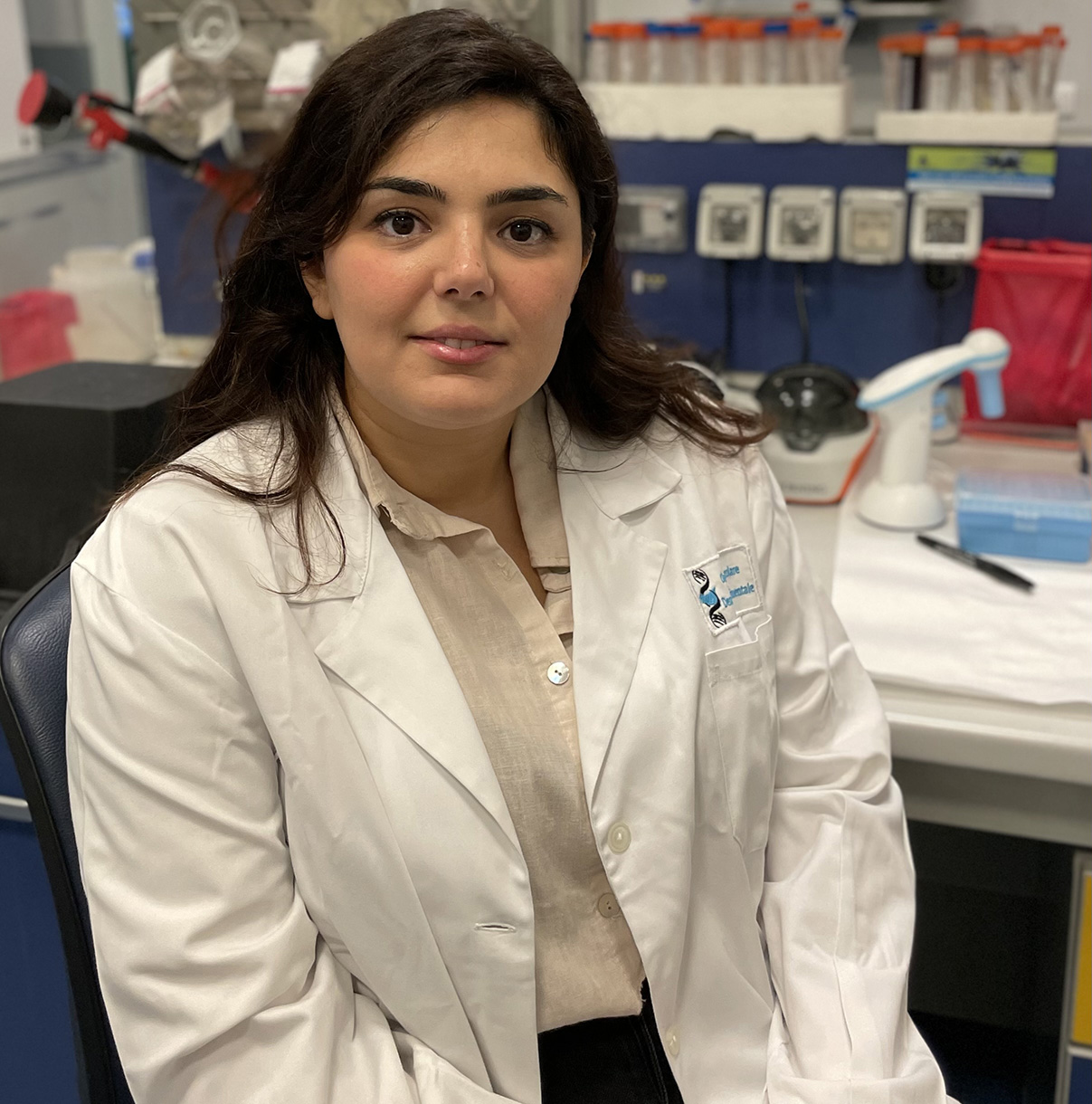
JESSICA RUZZOLINI (University of Firenze)
“Targeting YAP/TAZ signaling to overcome drug resistance in BRAF(V600E) melanoma cells”
Melanoma is a highly aggressive and increasingly widespread form of skin cancer. Identifying new therapeutic targets to counteract drug resistance is essential for developing more effective treatments aimed at the definitive eradication of the disease.
