


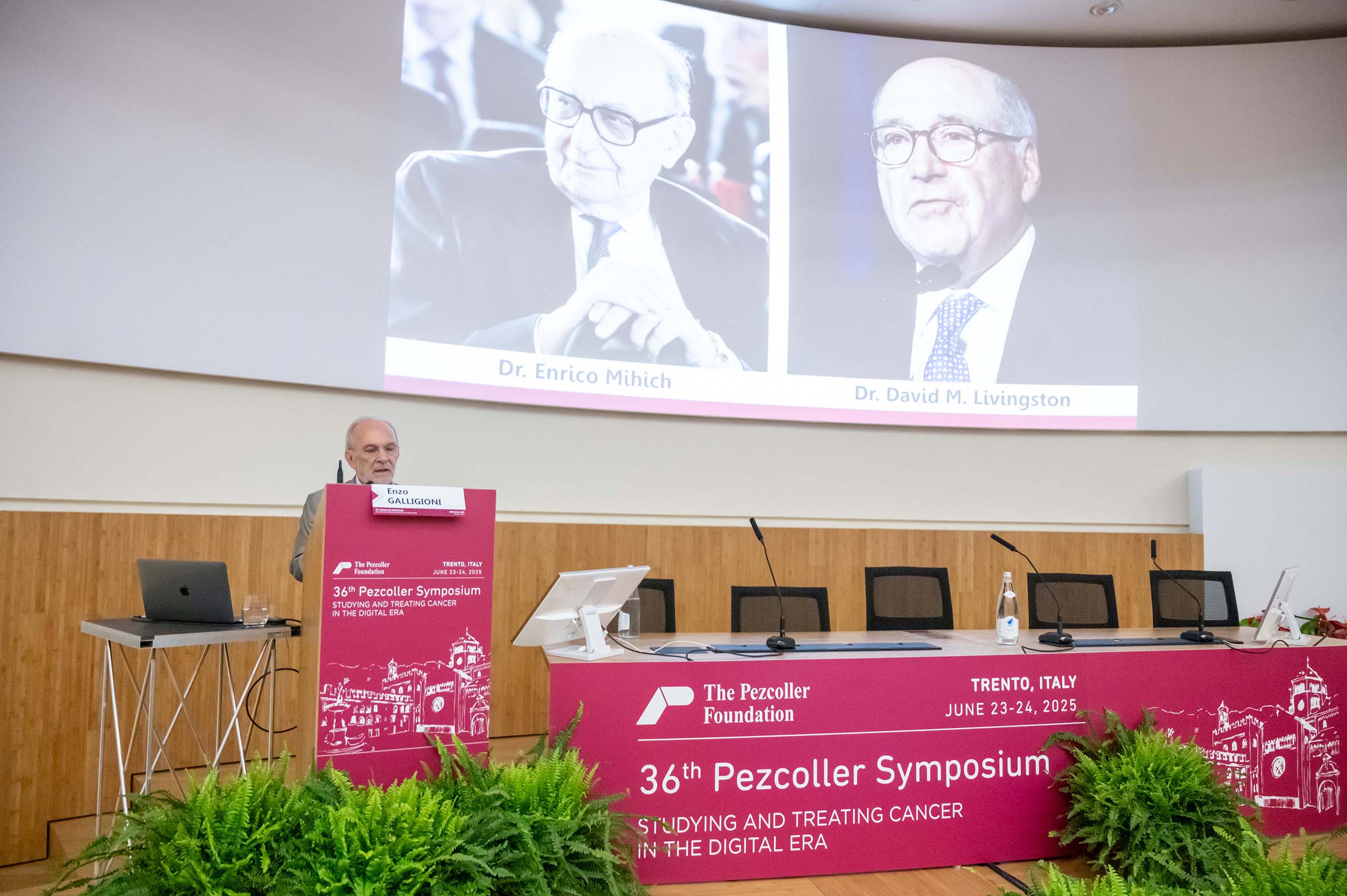
36° Pezcoller Symposium:
June 23-24, 2025
Humanities Department, University of Trento
“STUDYING and TREATING CANCER
in the DIGITAL ERA”
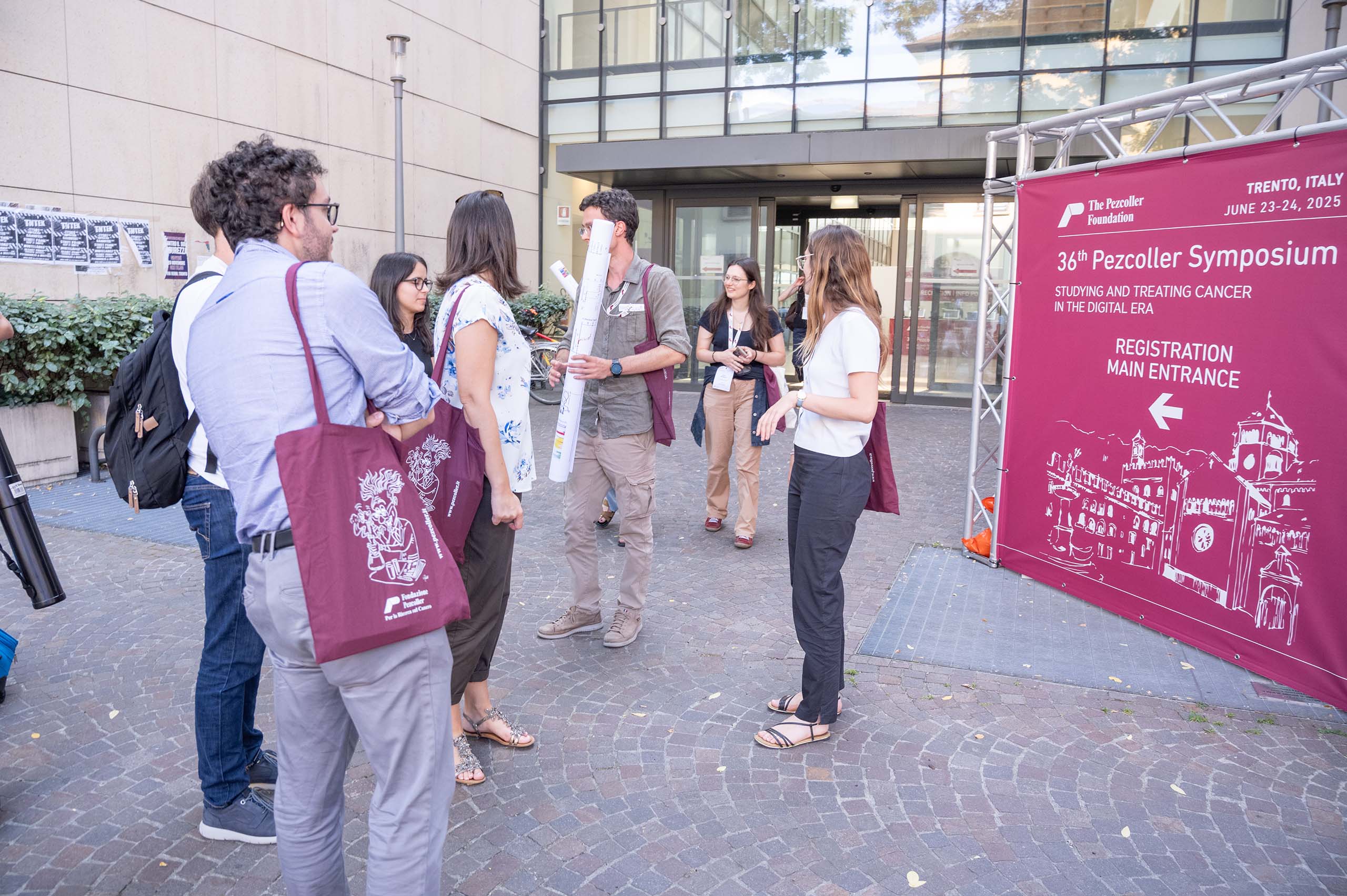
The Pezcoller Symposium is a scientific convention, focused on topic at the leading edge of cancer research. The purpose is encouraging networking among the best scientists in this field and giving opportunities for young researchers to engage with them.
Each Symposium focuses on a different topic, chosen by the Pezcoller Foundation Scientific Committee, chaired by Dr. William G. Kaelin.

OPPORTUNITIES FOR YOUNG RESEARCHERS
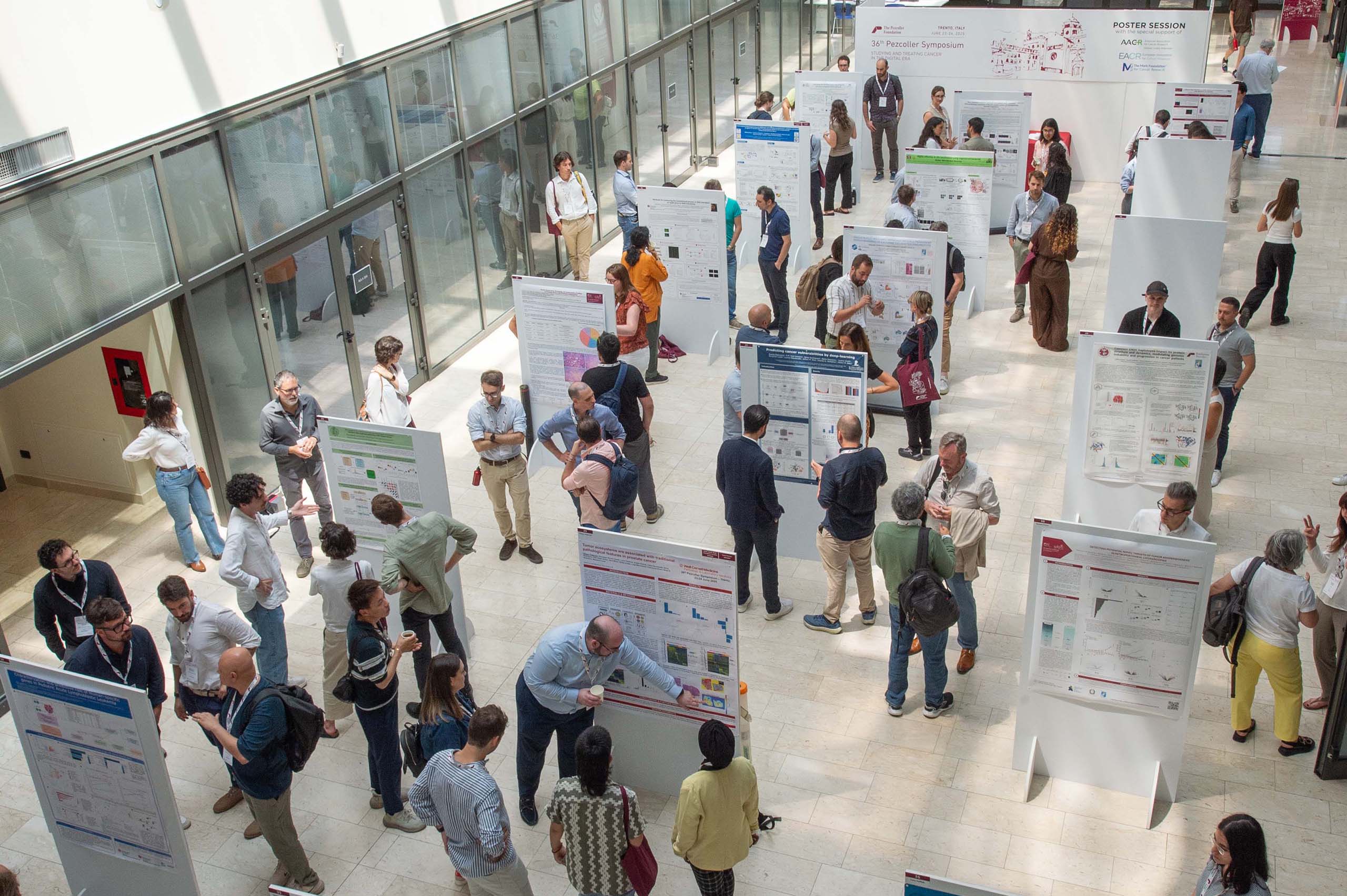
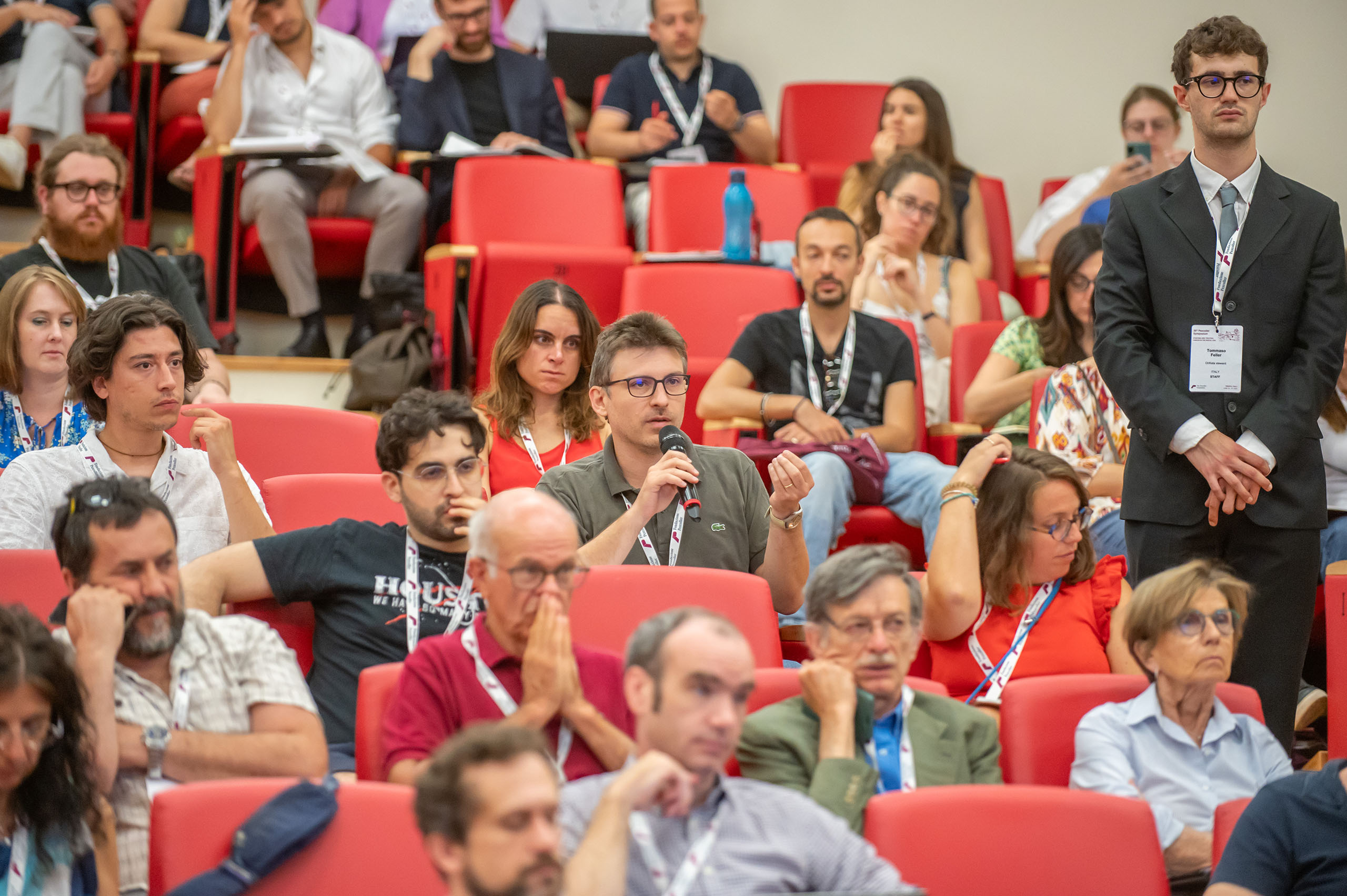
Great importance is given to young researchers, who are invited to submit an abstract to the Evaluation Committee for presenting it in the Poster Session.
The authors of the top 3 selected posters are invited to present their research in front of the plenary session of the Symposium.
Moreover:
- Begnudelli Awards: the authors of the 3 best abstracts from Italian facilities recieve a Begnudelli Award of €500/each, provided by Pezcoller Foundation
- Best Abstract Awards: the authors of top abstracts from non-Italian facilities recieve €500/each, provided by EACR, AACR e The Mark Foundation
- Travel Grants: to researchers from European or international facilities, EACR or AACR members. Thanks to the support of EACR, AACR and The Mark Foundation
- EMBO Poster Prize: the author of the poster most voted by Symposium participants will win a prize of €200.
2025 PEZCOLLER SYMPOSIUM FOCUS & GOALS
Advances in digital technologies, including in artificial intelligence, are transforming both basic cancer research and clinical cancer medicine. The immense opportunities created by these technologies also create significant challenges, including prosaic problems such as false positives from failure to correct for multiple hypothesis testing, overfitting, and AI “hallucinations”, to challenges related to energy and infrastructure demands for data storage, ethical and equitable data access, and maintenance of workforce and lay scientific literacy and proficiency in this rapidly changing scientific environment. Topics to be included in this symposium include use of large (“big”) data and AI in basic cancer biology, cancer target selection, drug development, pathology, and radiology.
Editors about Symposium
Find out what international editors had to say about the 36th Symposium