


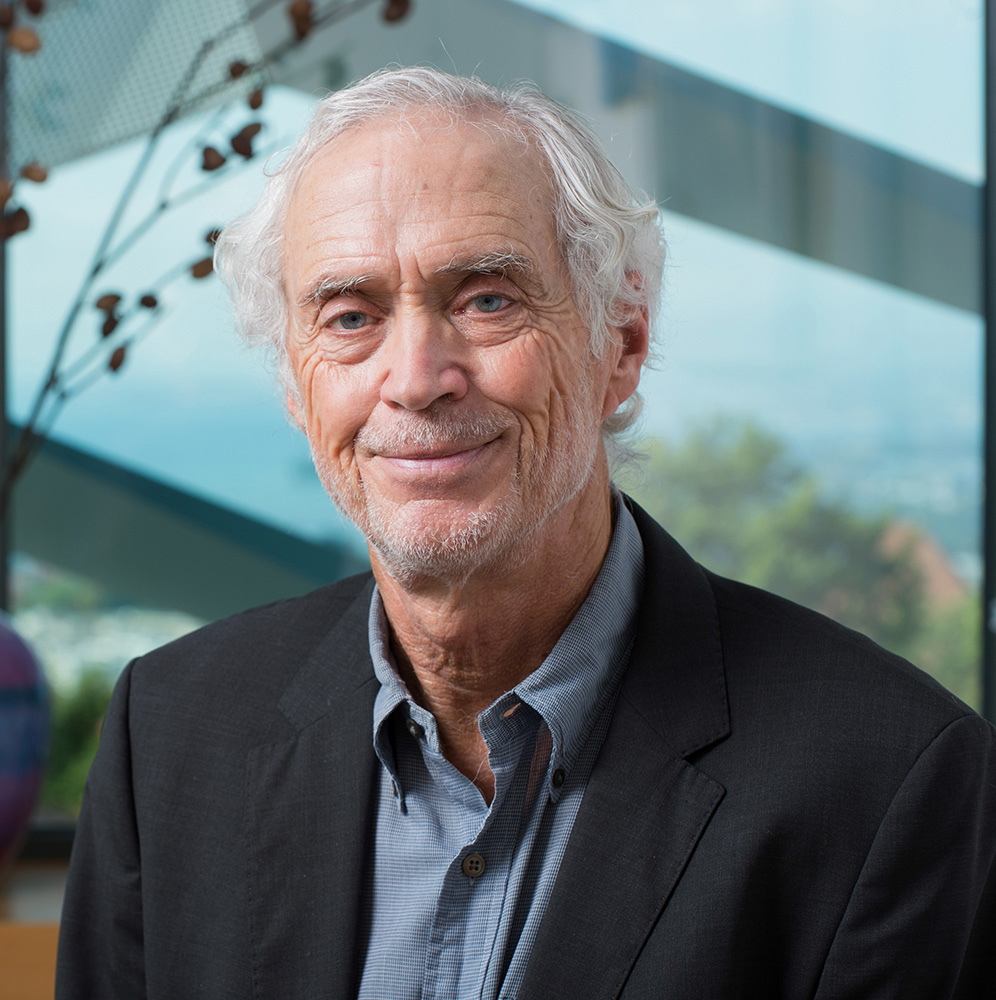
Douglas Hanahan
2025 Pezcoller-AACR International Award Winner
Dr. Hanahan is being recognized for his fundamental discoveries in cancer research that have had far-reaching translational impact.
Mouse Models and the Tumor Microenvironment
Douglas Hanahan revolutionized the understanding of cancer pathogenesis by engineering complex experimental mouse models. His research demonstrated for the first time that key malignant traits—such as invasiveness, metastasis, and immune evasion—do not rely solely on cancer cells themselves, but on how they force surrounding healthy cells in the tumor microenvironment to cooperate with them.
The “Hallmarks of Cancer”: A Conceptual Blueprint
Together with Robert Weinberg, Dr. Hanahan formulated the landmark “Hallmarks of Cancer.” This conceptual framework provided the global scientific community with an essential logical organizing principle to rationalize the vast complexity of cancer biology, defining the core capabilities that all tumors acquire as they evolve.
From Biological Complexity to Multi-Target Therapies
His multidisciplinary insights reshaped therapeutic strategies by showing that effectively treating cancer requires targeting both malignant cells and the supporting microenvironment. This pioneer work paved the way for novel combination therapies and multi-target drugs designed to disrupt the tumor ecosystem from multiple angles.
“His remarkable research has significantly advanced the field of cancer biology and thus has led to profound advancements in progress against cancer for the benefit of all patients. The Pezcoller Foundation and the AACR are delighted to recognize him with this most prestigious award.”
Margaret Foti, CEO dell’AACR
Biography
Douglas Hanahan was director of the ISREC (Swiss Institute for Experimental Cancer Research) in Lausanne until 2020, and is currently a Distinguished Scholar at the Ludwig Institute for Cancer Research.
A researcher at Cold Spring Harbor Laboratory in New York, he was also a professor at the University of California, San Francisco.
He earned a bachelor’s degree in physics from the Massachusetts Institute of Technology and later received his Ph.D. in biophysics from Harvard.
He was announced as the winner at the Annual Meeting of the American Association for Cancer Research in Chicago.
The traditional award ceremony was held on May 17, 2025, at the Teatro Sociale in Trento.