


The research carried out by Pezcoller-SIC fellowship recipients
2025-2026 Fellowships
GABRIELE ANTONARELLI (European Institute of Oncology, Milan)
“Identification Of Toxicity Biomarkers To Trastuzumab-Deruxtecan (T-Dxd) In Patients With Advanced Breast Cancer. Tox-Dxd: An Observational, Non-Interventional, Study”
His project aims to identify biomarkers capable of predicting
adverse events in the treatment of advanced breast cancer with Trastuzumab-deruxtecan. The research includes a retrospective analysis of 112 patients, recently published in ESMO Open, and a prospective phase involving the monitoring of 84 patients.

LUCREZIA CAMICIA (Centro di Riferimento Oncologico, Aviano)
“Study the role of Multimerin-2 in shaping tumor vessel stability to control the chemo/immunotherapy response”
Multimerin-2 is an extracellular matrix protein essential for blood vessel health, a key factor in evaluating the efficacy of anticancer therapies. Our study aims to investigate its role as a potential biomarker, with the goal of making treatments increasingly effective.

MATTIA COLUCCI (Casa Sollievo Sofferenza, S. Giovanni Rotondo)
“The functional role of EZH2 inactivation in the pathogenesis of HOXA-overexpressing Tcell acute lymphoblastic leukemia”
The project aims to provide deeper insights into the molecular mechanisms of an aggressive form of childhood leukemia (ETP-ALL). It investigates how the combination of genetic alterations promotes the disease, with the goal of identifying new therapeutic targets to develop more effective and less toxic treatments for young patients.

ANDREA COSTAMAGNA (University of Torino)
“Exploring the role of p130Cas in early metastatic pancreatic cancer cells”
Pancreatic ductal adenocarcinoma is among the most aggressive tumors due to its high metastatic potential. The project investigates how the p130Cas protein, activated by the mutated Kras oncogene, promotes the early dissemination of cancer cells through the PI3K-AKT signaling pathway, identifying potential therapeutic vulnerabilities.

MARIA VALERIA GIULI (University La Sapienza, Rome)
“Boosting synthetic lethality in High-Grade Serous Ovarian Cancer: induction of “BRCAness” via Pin1 inhibition”
Ovarian cancer is among the most lethal gynecological malignancies due to its high resistance to therapies. The study of BRCA gene mutations has improved treatments. This research investigates Pin1—an enzyme that regulates the function of many proteins, including BRCA1—as a therapeutic target to enhance treatment efficacy, even in patients without BRCA mutations.

TANIA PORCELLI (University of Palermo)
“Obesity Prompts a Permissive Microenvironment to Initiating-Tumor Process “
In the context of breast cancer, adipose tissue under obese conditions undergoes dysfunctional changes that promote the onset of pre-malignant alterations and tumor progression. Understanding these mechanisms will contribute to the development of novel therapeutic strategies.
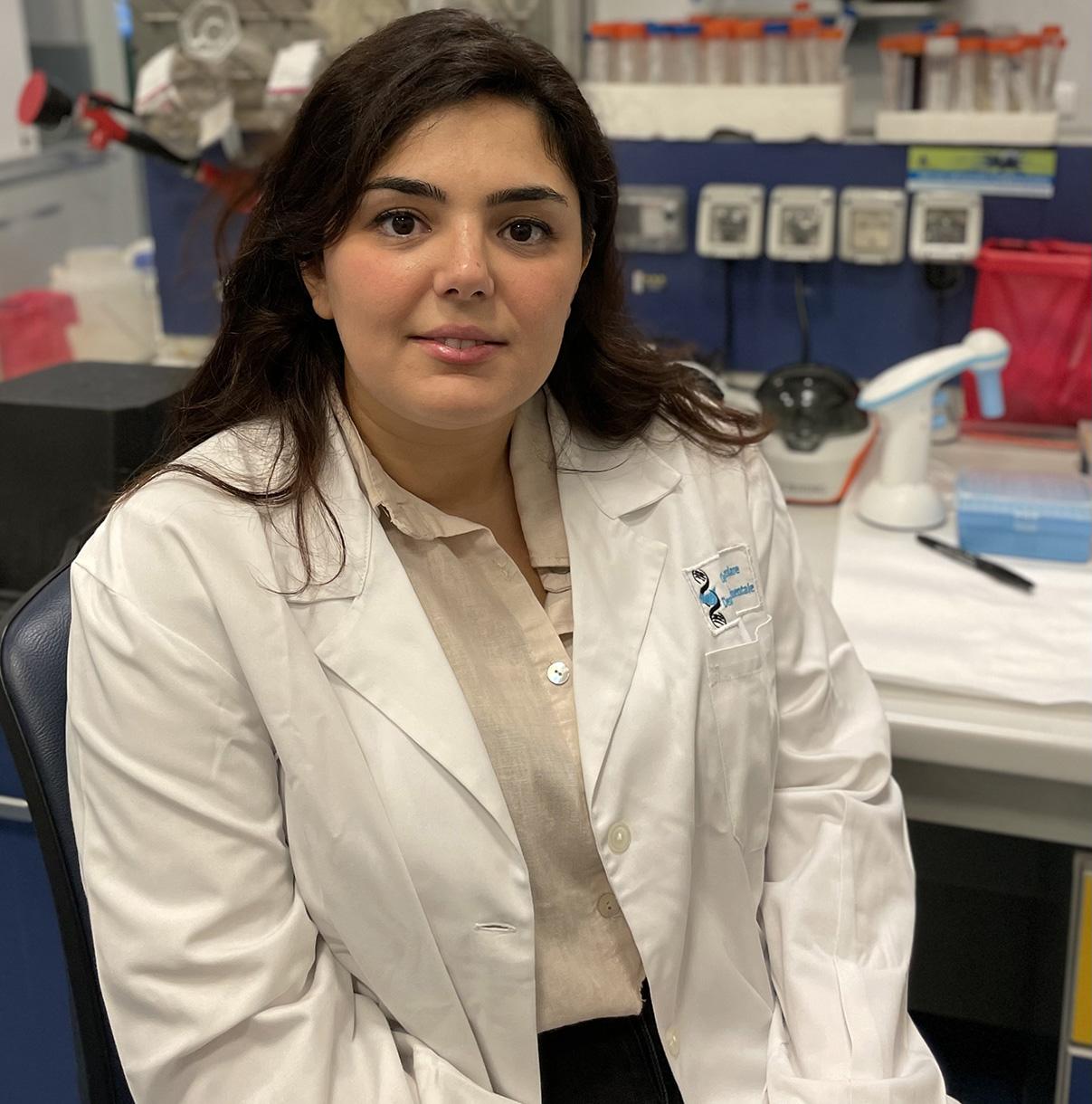
JESSICA RUZZOLINI (University of Firenze)
“Targeting YAP/TAZ signaling to overcome drug resistance in BRAF(V600E) melanoma cells”
Melanoma is a highly aggressive and increasingly widespread form of skin cancer. Identifying new therapeutic targets to counteract drug resistance is essential for developing more effective treatments aimed at the definitive eradication of the disease.
