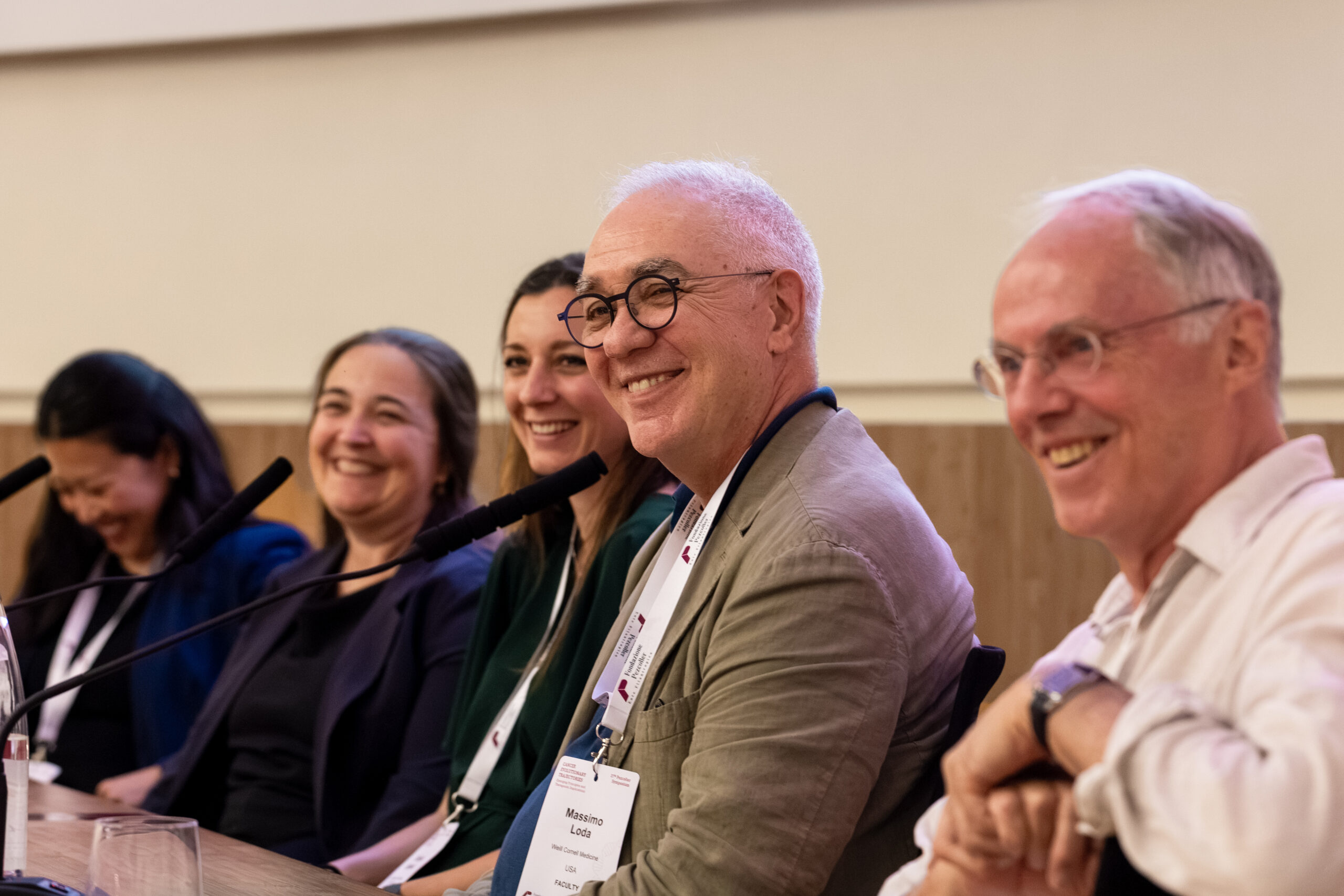
An in-depth look at the 37th Pezcoller Symposium, featuring interviews with three key figures from the 2026 edition.
Andrea Sottoriva (Human Technopole di Milano) reveals how Artificial Intelligence and complex mathematical models make it possible to map the evolution of cancer to anticipate its moves: the revolutionary goal is to prevent drug resistance and control the disease over time, exactly as was done for HIV.
From the perspective of precision medicine, Sarah-Maria Fendt (KU Leuven) challenges the concept of the “standard patient,” demonstrating how individual factors—such as fat accumulation in the liver—drive the aggressiveness of metastases in colorectal cancer, paving the way for targeted treatments for higher-risk patients.
Framing these discoveries is Massimo Loda (Weill Cornell Medicine, New York)—head of the evaluation committee for the 75 research projects selected for this year’s poster session—who highlights the extraordinary scientific level achieved by the Symposium, thanks in part to the leadership of Nobel Laureate William Kaelin: a record-breaking event that confirms its role as a decisive springboard for young scientists’ careers and a world-class magnet for top talent in oncology.